
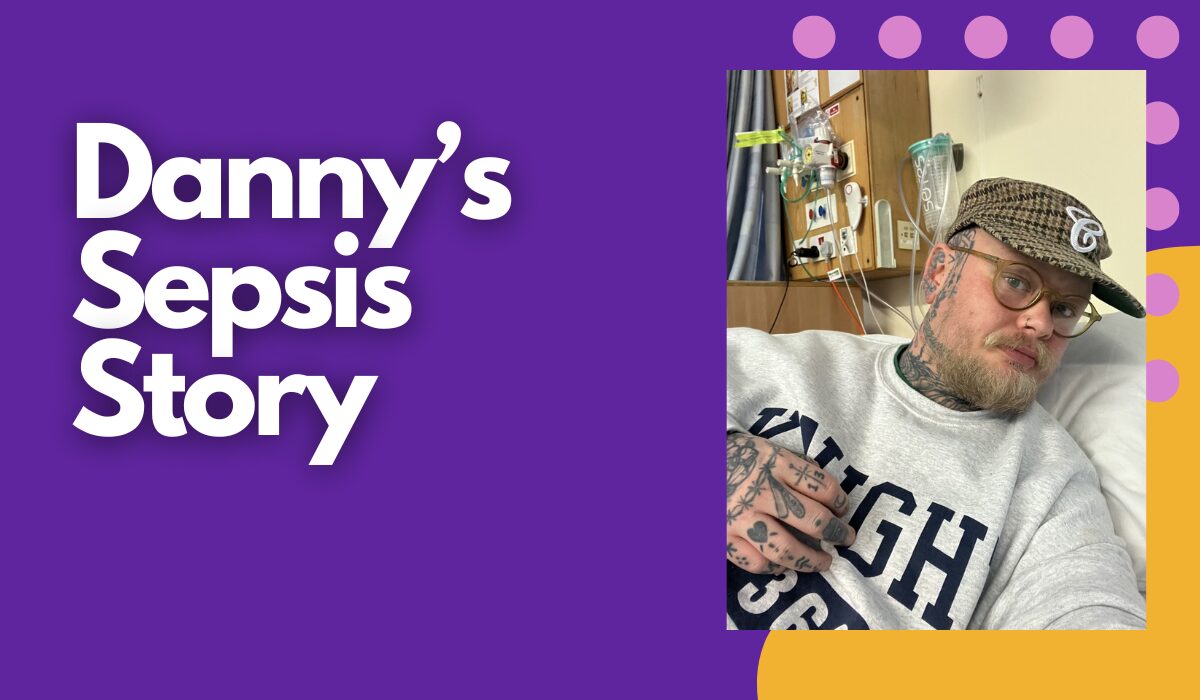
‘From one hour to the next, I faced a new challenge… My life and my family’s have been turned upside down, but my 3 year old boy has kept me going.’
My name is Danny and I am a 40-year-old husband and dad originally from Leicester but now living in Merthyr Tydfil, Wales. For the last 23 years, I have worked as a self-employed barber and hairdresser. Outside of work I love gigs, music, tattoos, fashion and – most importantly – spending time with my family. I’ve been married to my wife, Annie-Starr, for seven years, and we have a three-year-old son, Otis, who is my world.
None of us ever imagined how quickly everything could change.
On Sunday 6th July 2025, I started experiencing severe pain. It escalated quickly, and, before I knew it, I was being rushed to hospital. Doctors discovered a kidney stone had led to a serious infection which meant that I had to have an emergency stent fitted.
What should have been a straightforward recovery turned into something far more serious as my body went into septic shock. Multiple organ failure followed soon after that. Everything happened incredibly fast – so fast that even now I struggle to process it all.
Then the worst happened as I went into cardiac arrest and my heart stopped for 20 minutes.
Once I had been brought back, I was placed into an induced coma that I am told lasted four weeks. My family were told I might not make it. The shock and horror they went through is something I can’t even begin to imagine properly. The incredible team at Glangwili General Hospital fought to keep me alive and they are the reason I’m here today.
From one hour to the next, I faced a new challenge – from round the clock ventilation to daily dialysis.
Even after surviving the coma, the complications kept coming. I eventually lost two toes to amputation. Then in October I developed septic arthritis in my knee, which required another operation. While waiting for an emergency kidney stent to be removed, my body began rejecting it. In January, in what proved to be yet another traumatic experience, I actually passed the stent and kidney stone myself in A&E.
I have a hole in my leg caused by an intraosseous access needle that was used in ICU, and I’m currently waiting for plastic surgery to repair it. I also have nerve damage in my feet, and district nurses regularly visit to help with ongoing treatment.
I still haven’t been able to return to work.
My life and my family’s have been turned upside down, but my 3 year old boy has kept me going. Recovery is slow and unpredictable, but I’m determined to keep moving forward. This experience has shown me how fragile life can be and how important awareness of sepsis is.
At some point in the future I’m planning to raise funds for the Ruby Rose Foundation and other sepsis charities with a sponsored mountain climb challenge up Pen y Fan. In the meantime if sharing my story can help even one person recognise the signs earlier or understand how serious sepsis can be, then it will mean something good came from this nightmare.
Before this happened to me, I didn’t really know much about sepsis. It’s something that can strike fast and change everything in a matter of hours.
I’m still on the road to recovery. I’m still waiting for surgery. I’m still working toward the day I can return to the barber’s chair and get back to the job and life I love.
But most importantly, I’m still here. And for that I’m incredibly grateful.
Thank you so much for taking the time to read my story. It truly means a lot. If sharing this helps raise awareness and supports others facing sepsis, then it’s worth every word.
Charity Comment
Stories like Danny’s are a powerful reminder of why the work of Sepsis Research FEAT is so important.
Sepsis can strike suddenly and escalate with devastating speed, turning what begins as a treatable infection into a life-threatening medical emergency in a matter of hours. This story highlights the reality faced by thousands of families every year — the shock of critical illness, the long and difficult road to recovery, and the life-changing impact sepsis can leave behind.
We are so grateful to Danny and other sepsis survivors who share their experiences so openly. Speaking about sepsis is not easy, especially after such a traumatic journey, but stories like this play a vital role in raising awareness and helping others recognise the warning signs earlier. Greater awareness saves lives.
As a charity, Sepsis Research FEAT works to fund pioneering medical research aimed at improving the diagnosis, treatment and prevention of sepsis – all identified as key priorities in a charity collaboration between patients, families, clinicians and the NIHR in 2023/24. The charity’s mission is simple but urgent: to ensure more people survive sepsis and that those who do survive have better outcomes and support during recovery.
Survivors and their families are at the heart of this work. We want to extend our sincere thanks to Danny and others like him who share their stories and fundraise to support this charity’s work, helping to help shine a light on a condition that still claims as many lives as breast, bowel and prostate cancer combined in the UK every year.


