Shaping the Future of Sepsis Research: Top 10 Priorities Finalised
In the autumn of 2024, after two years of dedicated work, the Sepsis Priority Setting Partnership (PSP), led by the James Lind Alliance (JLA) and Sepsis Research FEAT, successfully identified the top 10 research priorities for sepsis. This milestone was the result of collaboration with 1,744 patients, carers, family members and healthcare professionals, all of whom contributed to shaping the future of sepsis research. Joint project lead, Professor Bronwen Connolly, outlined the process in a presentation at the Intensive Care Society Congress in Birmingham in July 2025.
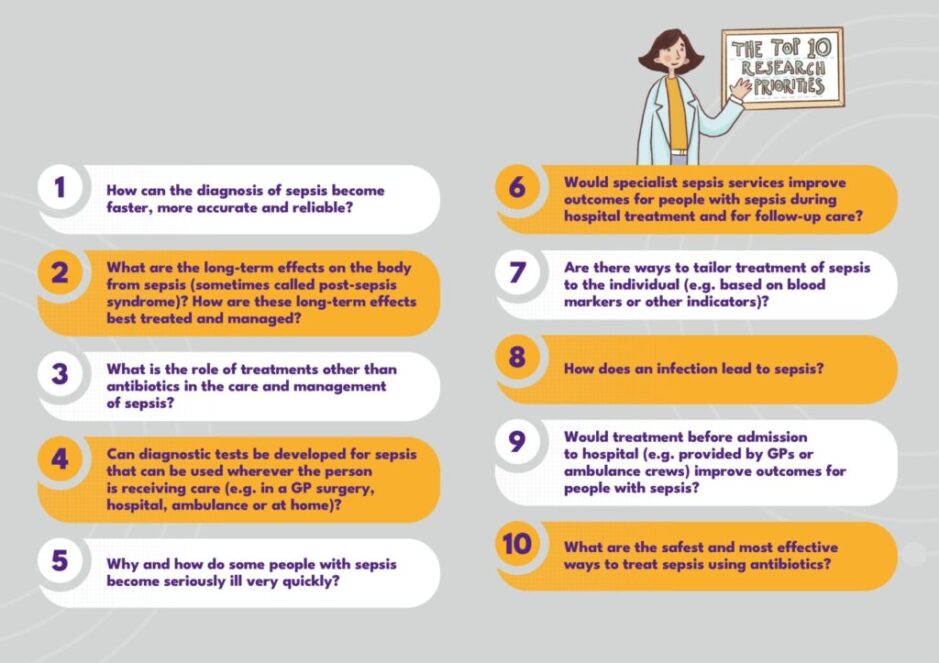
These priorities currently represent the most crucial unanswered questions in sepsis research, ensuring that future studies focus on the real-world needs of those affected by this life-threatening condition.
Why These Priorities Matter
Despite huge advances in other areas of medical science such as cancer, cardiovascular disease and strokes, sepsis remains a global health challenge, responsible for some 11 million deaths each year. By identifying these top 10 research priorities, we are ensuring that the most pressing questions are addressed, guiding future research efforts, and helping to improve diagnosis, treatment and long-term outcomes for sepsis patients.
Published Findings in:
Lancet Respiratory Medicine
We are also excited to announce that our findings have been published in The Lancet Respiratory Medicine. You can read the full publication here.
Anaesthesia
In June 2025, the results also appeared in a paper published in the academic journal Anaesthesia with an accompanying podcast from key members of the project steering group – Professor JoAnne McPeake, Dr Andrew Conway Morris and Mark Oakes. Click here to listen.
Get Involved
We now encourage you to do two things:
Firstly, share these top 10 priorities with your networks as widely as possible. By doing so, you can help ensure that researchers, funding bodies, and policymakers recognise and act on these critical areas of need. For more information, please download our Sepsis Stakeholder Booklet, or visit the James Lind Alliance’s website.
Secondly, take part in our research mapping survey:
Sepsis Research FEAT is building a picture of the sepsis research landscape in the UK and worldwide. In order to help us target research funding and support effectively we need to know who is working on this vital topic and the areas of research they are engaged in. If you are a researcher working on sepsis, severe infections or other infection-related topics, whether you work for a university, the NHS in the UK or another institution worldwide, please let us know about the work you are doing. We are interested in research at all levels, from fundamental biology to clinical trials, from acute presentation to long-term follow-up and patient impact. It takes five minutes to let us know about the vital research you are undertaking, and doing so will help us support the community of sepsis researchers.

The PSP team
Sepsis Research FEAT secured the expertise of Dr Joanne McPeake of Cambridge University, Dr Bronwen Connelly of Queens University, Belfast and Dr Nazir Lone of Edinburgh University as joint clinical leads for the Sepsis Research PSP. We have also explored partnership working with other interested organisations and associations such as the Royal College of Emergency Medicine.
Representing Sepsis Research FEAT have been Colin Graham and Lynsay Bischoff.
Also assisting the process were a JLA Information specialist, Dr Kristina Staley, and JLA Advisor, Dr Nahid Ahmad.
We also recruited a steering group with equal numbers of medics and patient/carers, with representation across age, geography and socioeconomic background.

The Naked Scientist Podcast
Dr Joanne McPeake featured on the Naked Scientists Podcast with sepsis survivor, Emily Perry and host Will Pringle to discuss the James Lind Alliance priority setting partnership. Listen to the full podcast below